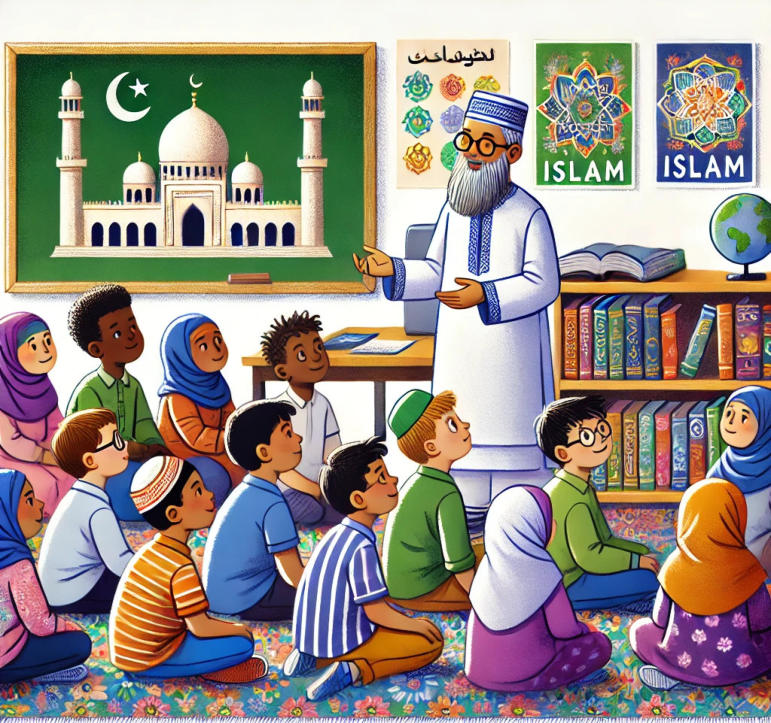
Review of Understanding Islam By AI.
A Beginner's Guide to Muslims and Their Faith
Good Points:
Accessible and Friendly Tone: The book adopts a
warm, non-intimidating style, making it
accessible for readers unfamiliar with Islam. It
succeeds in presenting complex ideas simply and
respectfully.
Comprehensive Structure: The book covers a
wide range of topics, including the basics of
Islamic beliefs, history, culture, and worship.
Chapters like "What is Islam?" and "Who are
Muslims?" offer foundational insights that are
crucial for beginners.
Diversity and Inclusivity: The emphasis on
Islam's global nature and its cultural diversity is
commendable. By highlighting differences in
practices and traditions, the book avoids
portraying Islam as a monolithic entity.
Focus on Misconceptions: The dedicated chapter
on addressing misconceptions about Islam is an
excellent touch. It directly confronts common
stereotypes and provides factual clarifications.
Holistic Presentation of Worship and Culture: The
discussion of worship practices, family values,
food habits, and celebrations like Ramadan and
Eid offers a holistic picture of Muslim life.
Promotion of Understanding and Coexistence:
The concluding chapters encourage readers to
engage in respectful dialogue and learn more
about Islam through firsthand experiences,
fostering better interfaith understanding.
Weaknesses:
Repetition Across Chapters: Certain topics, such
as the significance of prayer or the story of
Prophet Muhammad, are repeated across
multiple chapters, which may feel redundant to
readers.
Limited Depth on Historical Context: While the
book simplifies history effectively, it could
include more depth about key events and
figures, such as the Caliphates or contributions
during the Islamic Golden Age.
Generalizations in Misconceptions Chapter:
Although misconceptions are addressed, the
explanations can feel overly simplified. For
instance, the discussion of women’s rights could
delve deeper into regional variations and
historical progression within Islamic societies.
Focus on Traditional Practices: The emphasis on
traditional practices might alienate readers
looking to understand modern, reformist, or
progressive Muslim perspectives.
Suggestions for Improvement:
Add Visual Elements: Incorporating maps, charts,
or illustrations could make the text more
engaging and help visualize Islam’s global spread
and diversity.
Expand on Modern Issues: Adding more content
about contemporary Muslim life, challenges like
Islamophobia, and contributions of Muslims in
the modern world could make the book more
relevant to today’s readers.
Broaden the Scope of Contributions: While the
book briefly mentions Islam’s contributions to
science and culture, dedicating a detailed
chapter to this aspect would enrich its narrative.
Provide Comparative Insights: Drawing more
explicit comparisons between Islam and other
religions could help readers relate better and
understand the similarities and differences.
Interactive Features: Including reflection
questions or suggestions for further reading at
the end of each chapter could encourage deeper
engagement.
Conclusion:
Understanding Islam: A Beginner's Guide is a
valuable resource for those new to Islam,
offering a clear and respectful introduction to
the faith. While it excels in accessibility and
breadth, it could benefit from deeper exploration
of certain topics and more interactive or visual
elements. With these enhancements, the book
could become an even stronger tool for fostering
understanding and respect across cultures and
faiths.