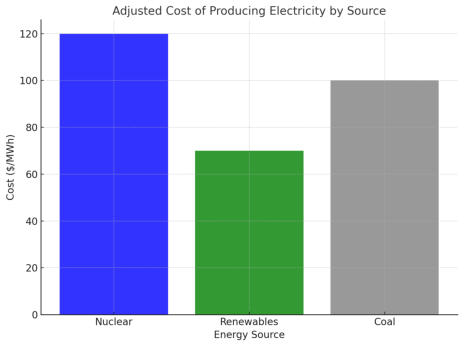
Nuclear: Includes base costs, nuclear waste
disposal, and long-term management.
Renewables: Accounts for grid adaptation, such as
storage and transmission upgrades for variability
Coal: Reflects costs including environmental
mitigation measures like emissions controls.
For countries with abundant sunshine and wind,
focusing on renewables is often the most cost-
effective and sustainable strategy. Investing in
solar and wind infrastructure, alongside energy
storage and grid adaptation, can meet energy
demands while minimizing environmental impact.
Nuclear may not be practical due to its high setup
costs, waste management challenges, and the
added expense of shipping waste overseas.
However, nuclear could still play a role as a backup
in scenarios where renewable output is
inconsistent
Reducing reliance on coal and gas remains crucial,
paired with a transition plan that prioritizes clean
technologies. Policies should be tailored to each
nation’s natural resources and economic realities,
ensuring a resilient, low-cost energy future.
Conclusion by AI